

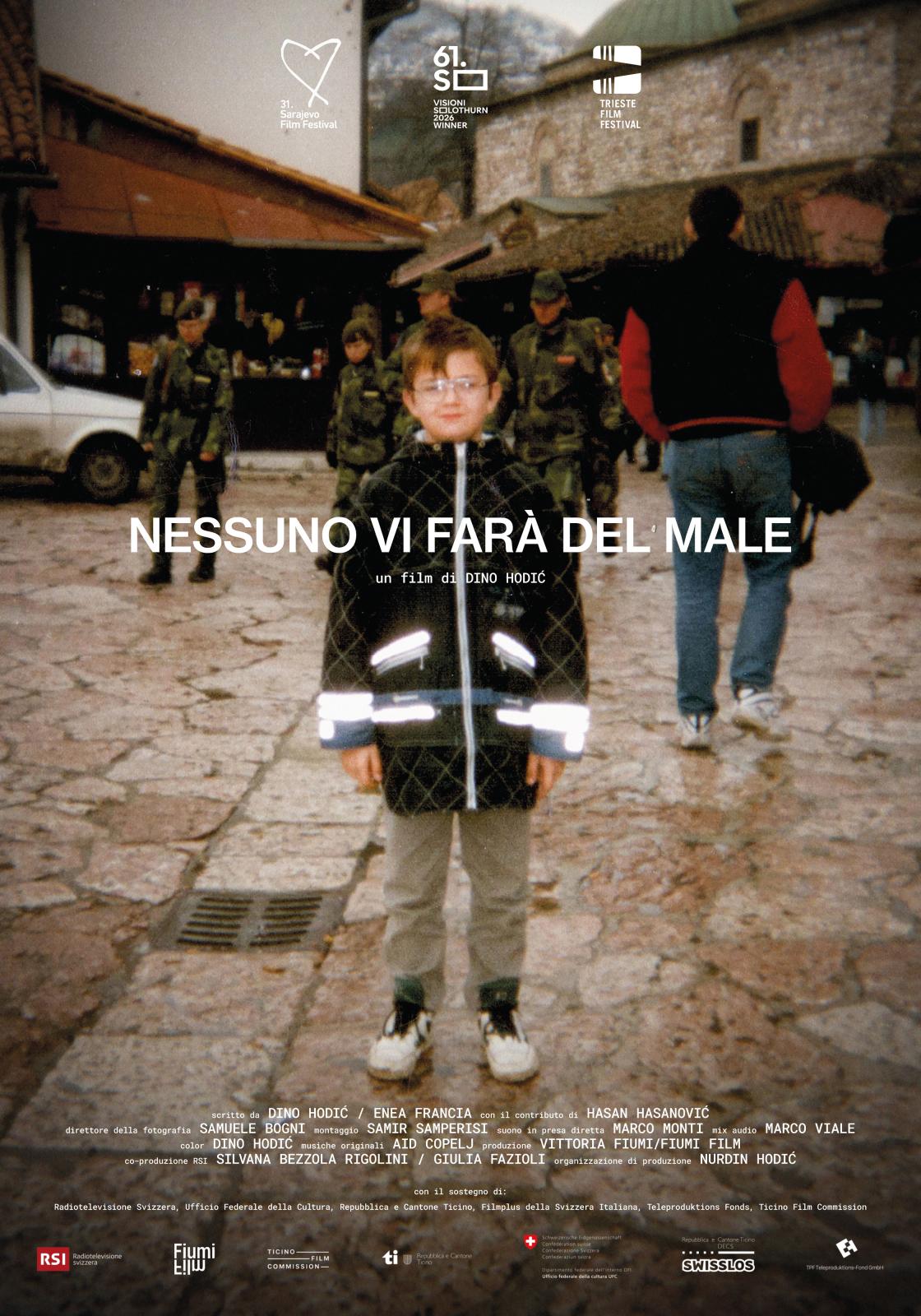
No one will hurt you
A filmmaker, who fled to Switzerland as a child, returns to the roots of his identity by following Hasan, a survivor of the Srebrenica massacre, on a journey of memory and resilience.
Ticino Film Commission
- RSI, TPF, Film Plus, UFC, Decs, Ticino Film Commission
(selection):
- Sarajevo Film Festival 2025
Thirty years after Srebrenica, a filmmaker who fled to Switzerland as a child embarks on an intimate journey to the roots of his identity through the story of Hasan, one of the few survivors.
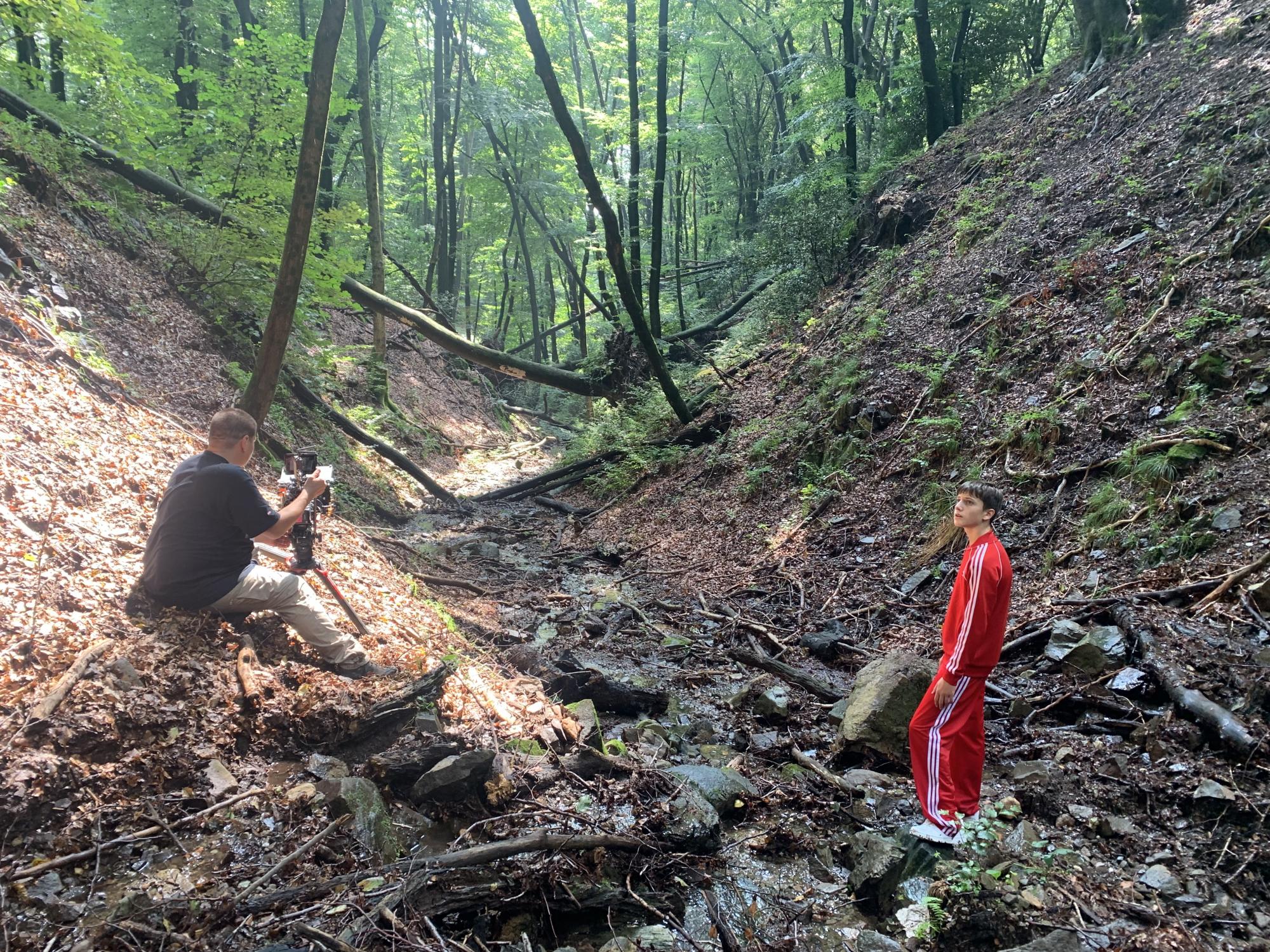
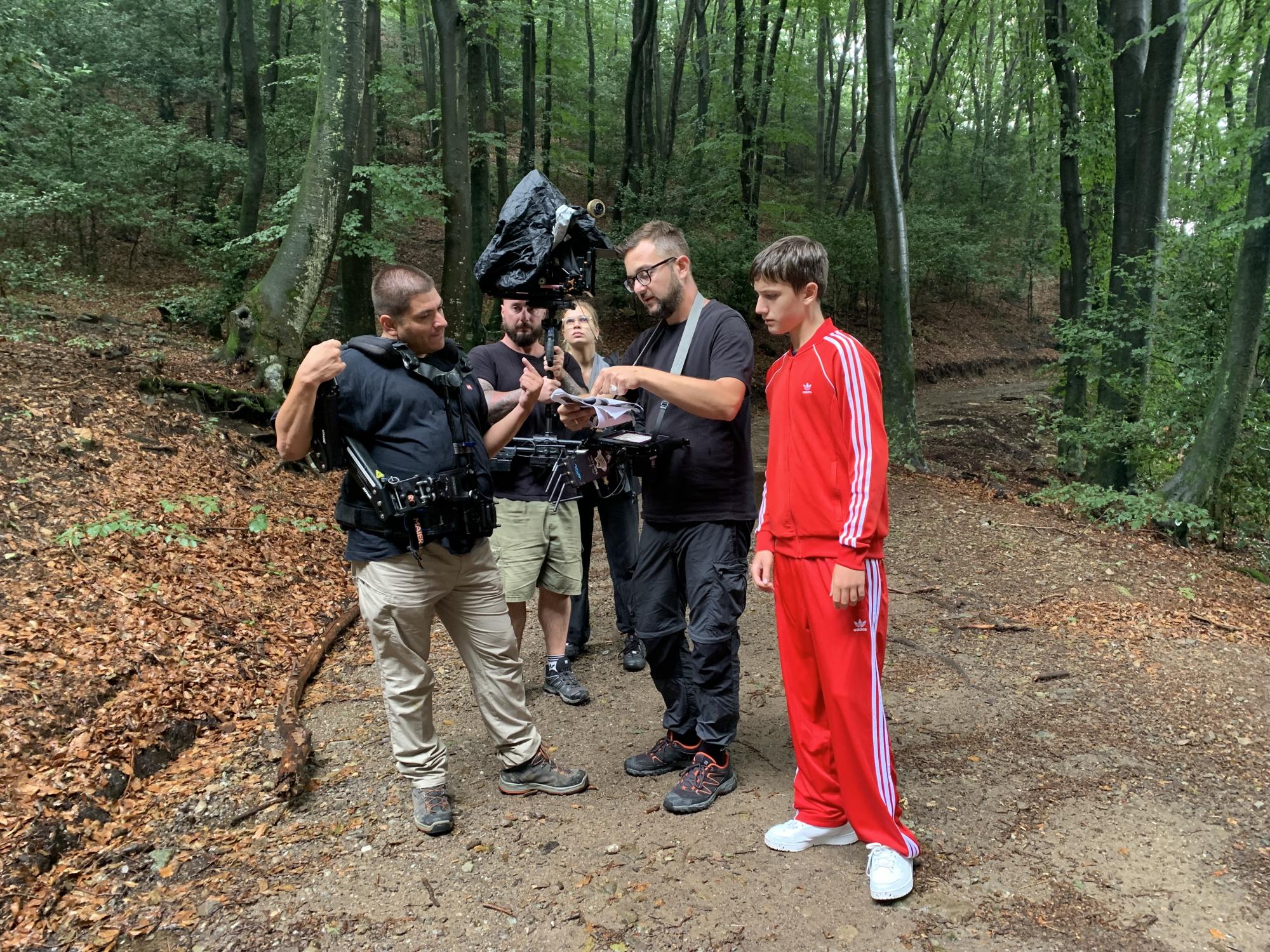
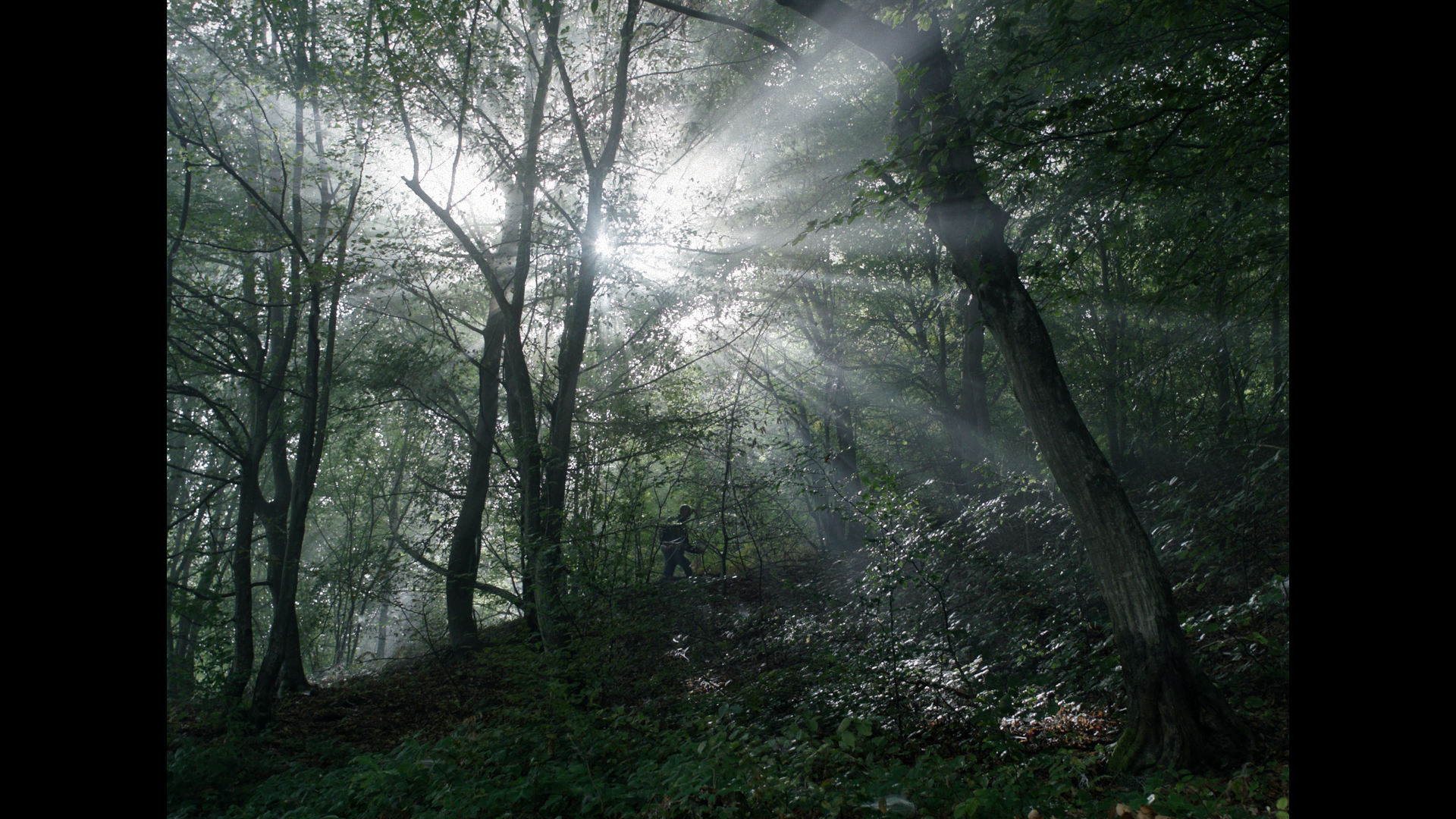
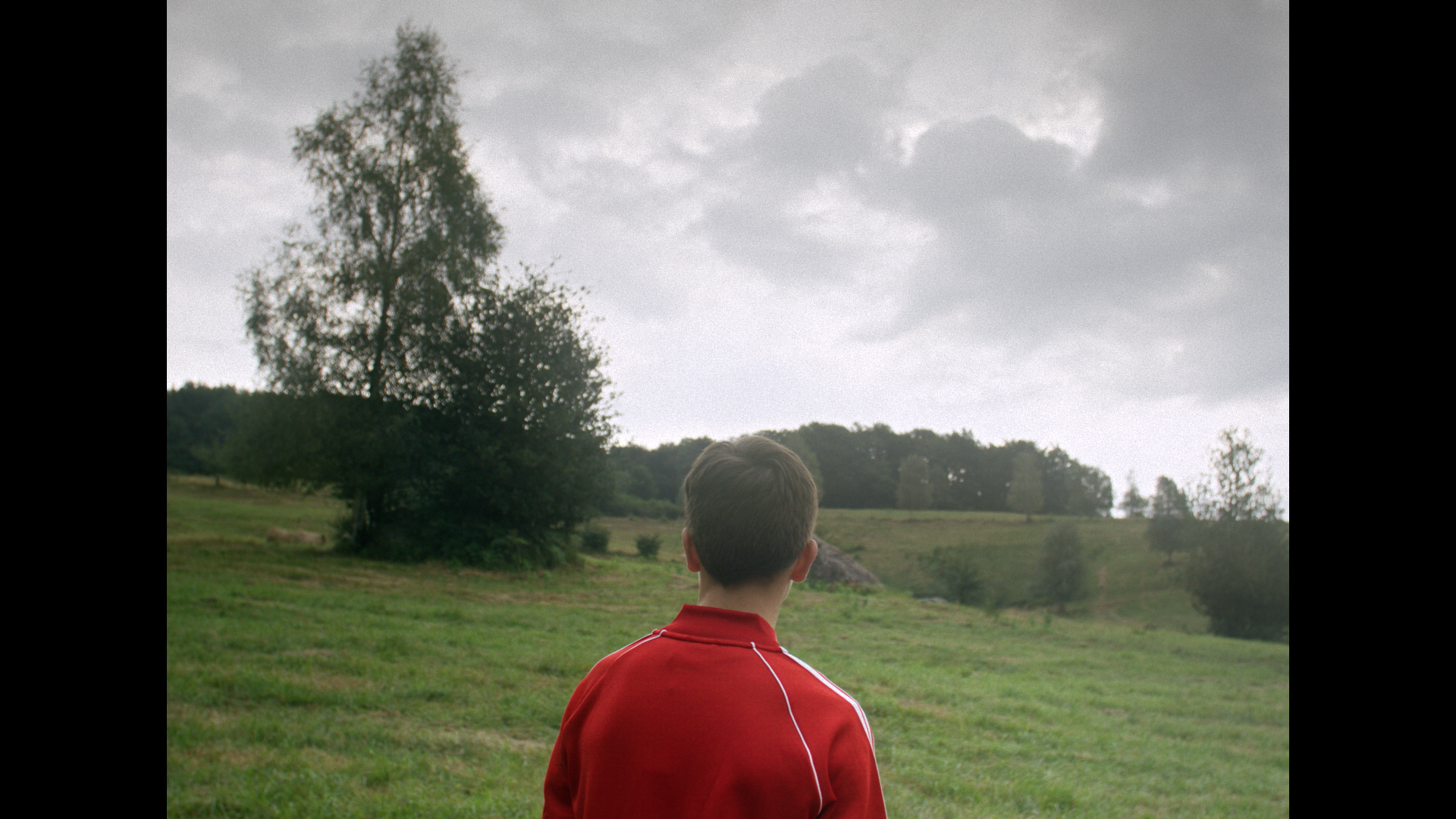
The sequence of reconstructions of the “child in the red tracksuit,” drawn from the personal account of Hasan, a survivor fleeing from Srebrenica during the war in the 1990s in Bosnia, was filmed in Ticino, in Vico Morcote, more precisely in a forest at Alpe Vicagna. I chose this forest because its atmosphere and silences recall those that Hasan was forced to cross in order to survive. It is not the same place, but the similarity of the natural setting makes it possible to evoke the same sense of loss and protection.
In this context, the “child in the red tracksuit” enters the scene. The color of his clothing breaks the uniformity of the landscape and marks the presence of a figure that appears fragile. Amidst the green and the shadows, the red endures. It is not swallowed by the forest; it does not disappear into silence. It remains visible, like a memory that refuses to fade, like a life that continues to assert itself even when reduced to a fragile hope.
In the documentary, the images of Hasan intertwine with those of the child. The editing alternates between the child’s path and Hasan’s path through the forest, in the mist illuminated by a strong beam of light, as he recalls those tragic days in a slow voice. The “child in the red tracksuit” takes on the role of ferryman, leading Hasan toward salvation. He is a figure of passage, one who guides and accompanies us, moving suspended between reality and dream.
I believe that filming this scene in Switzerland highlights a fundamental aspect of memory: it does not remain confined to one specific territory. The forest above Vico Morcote becomes almost a bridge, a place that refers to other places and other stories, allowing remembrance to emerge without the need to faithfully reconstruct the original setting. The figure of the “child in the red tracksuit” reminds us that flight and loss do not belong to one place or one time; at the same time, it is a symbol of hope and resilience. It becomes a universal testimony.
Gallery
Contacts
Ticino Film Commission
PalaCinema Via F. Rusca 1
CP 20
6601 Locarno
T +41 91 751 19 75
info@ticinofilmcommission.ch
Follow us on social networks



© 2026 Ticino Film Commission | Cookie Policy | Contacts | Development REDESIGN | Webdesign parisiva—